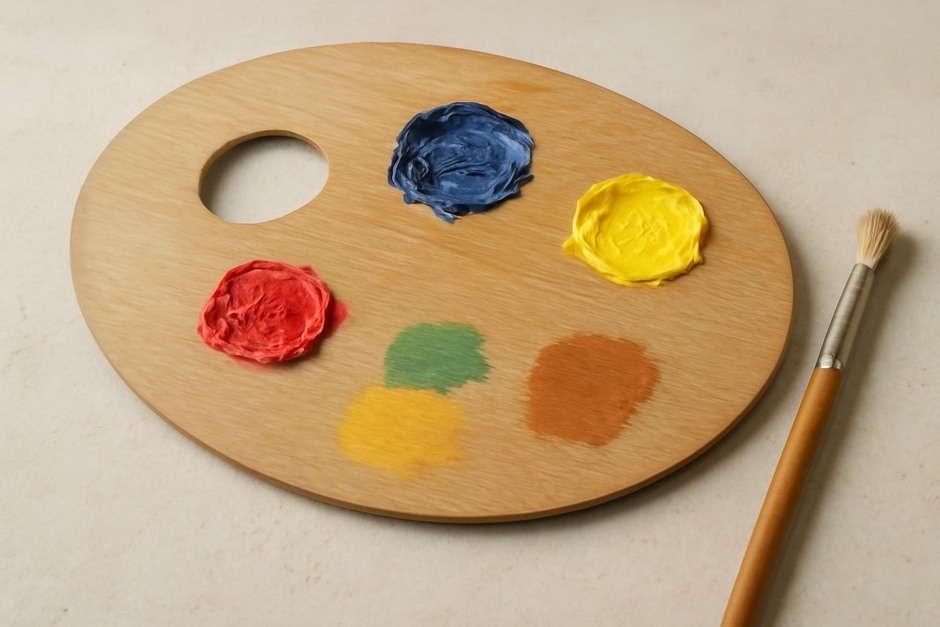
Working with Limited Colour Palettes
Why limit your palette?
Working with a limited set of pigments simplifies decisions and highlights relationships between colours. A restrained palette helps you learn how mixes behave, how to achieve neutral greys, and how temperature contrasts create visual interest. It is also a practical approach when preparing for plein air or travel work.
Choose a practical starting set
A common and useful starting point is a warm and cool pair for each primary: warm red, cool red, warm yellow, cool yellow, warm blue, cool blue. For minimal palettes, many artists begin with three tubes: a yellow, a red, and a blue chosen to give broad mixing capabilities. For instance:
- Warm red (cadmium or pyrrole), cool red (alizarin-like quinacridone).
- Warm yellow (cadmium or Hansa), cool yellow (lemon or nickel titanate).
- Warm blue (ultramarine) and cool blue (phthalo or cerulean).
With only three tubes you can still achieve a wide range of tones by mixing and by adjusting relative proportions.
Practice neutral mixes
One of the best lessons from limited palettes is learning to make neutrals and greys. Mix complementary pairs to arrive at muted tones useful for shadows and subtle shifts. Practice creating a series of greys along a strip, varying the ratio gradually. This exercise sharpens your perception of chroma and value.
Control temperature
Temperature—the sense of warm versus cool—can be used to push forms forward or back. Choose one direction for a given painting: perhaps warm lights and cool shadows, or the opposite. A limited palette helps you see how subtle temperature shifts affect depth without relying on many pure pigments.
Swatch and document
Make a swatch sheet for each palette you try. Paint pure pigments, two-way mixes, and three-way mixes. Note proportions beside each swatch. Over time these sheets become a reference that speeds decision-making and reduces wasted trials while painting.
Use value sketches
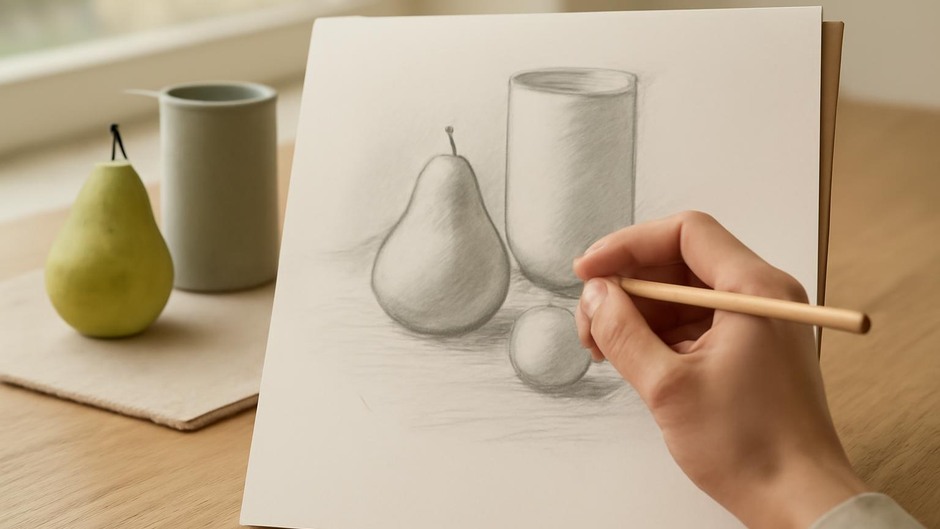
Before committing to colour, do a quick value study in monochrome to determine the overall light structure. Then translate those values to your colour mixes, testing how close mixes come to the intended values. A correct value foundation often solves colour problems before they occur.
Accept the palette’s voice
Each limited palette has a personality. Some will lean toward clear, bright mixes; others toward muted, earthy tones. Embrace the character you get from a given combination rather than trying to force it into a range it cannot naturally produce. This acceptance often leads to more coherent and interesting work.
Expand deliberately
If you need a new colour later, add it intentionally rather than impulsively. Ask whether the new tube significantly expands your mixing range or simply replaces a mix you can already achieve. Deliberate expansion keeps your learning focused and preserves the benefits of limitation.
Working with fewer colours is a practical teacher: it clarifies decisions, deepens your grasp of mixing, and encourages creative solutions. Over time the habits built with a limited palette transfer to broader colour work, because you have learned to see relationships rather than rely on many ready-made hues.