Choosing Paper, Brushes, and Pens for Everyday Work
Material choices as practical habits
Selecting a small set of reliable materials reduces decision overhead and makes daily practice easier. Rather than chasing novelty, favor durability, familiarity, and suitability for the techniques you use most often.
Paper: weight, texture, and format
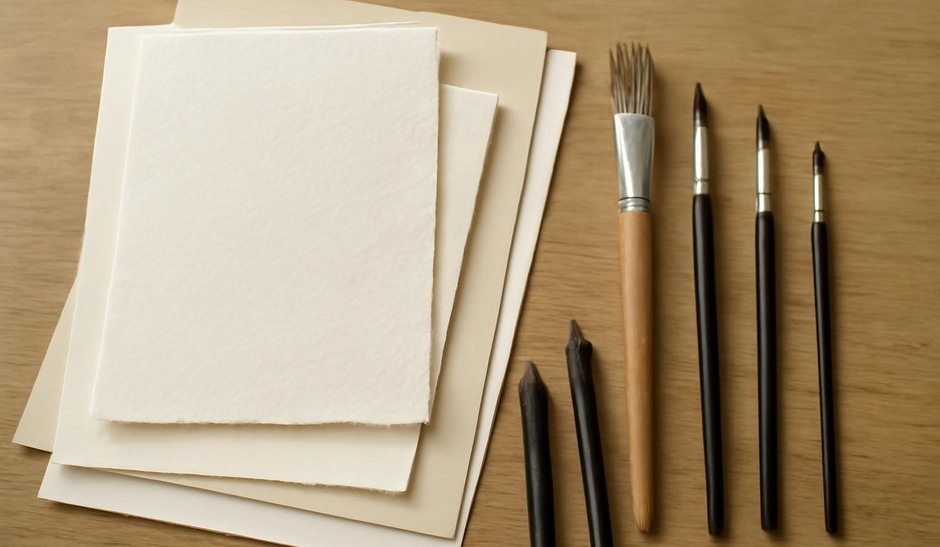
For mixed sketching and occasional washes, a paper weight between 140lb (300gsm) and 200lb (425gsm) is a good compromise. Heavier papers tolerate water and reworking; lighter papers are easier to carry. Surface texture matters: cold-pressed papers have a tooth that holds dry media and small washes, while hot-pressed papers are smoother and suit pen work and detailed ink.
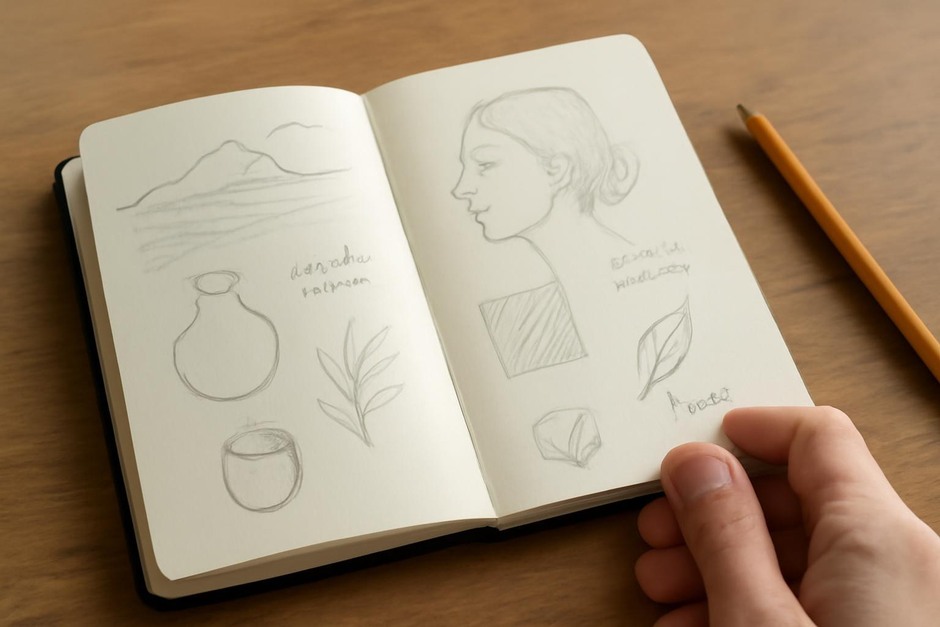
Consider format: a bound sketchbook offers continuity and midterm review, while loose sheets allow experimentation with different sizes and papers. Choose one reliable sketchbook for daily use and keep a small stack of loose, heavier sheets for studies you may want to frame.
Brushes: shapes and construction
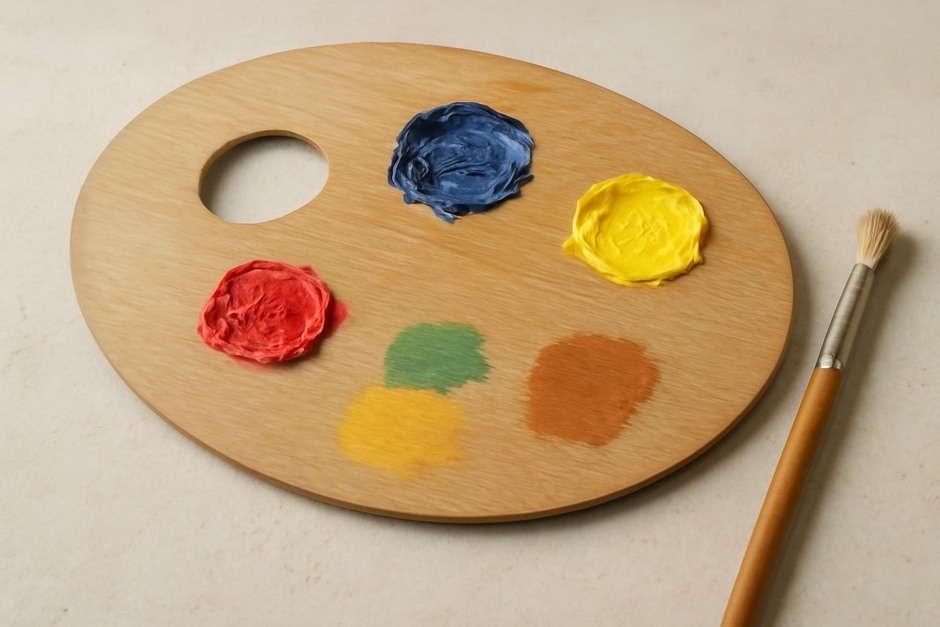
For water-based work, a few versatile brush shapes cover most needs: a round brush for lines and controlled washes, a flat for broad strokes and edges, and a small detail brush for refinement. Synthetic brushes have improved considerably and are durable for mixed media; natural-hair brushes offer a different spring and paint retention that some prefer for watercolor or fine oils.
Pay attention to the ferrule and handle: well-constructed brushes resist splaying and feel balanced in the hand. Clean them gently and store them horizontally or with bristles up briefly to maintain shape.
Pens and drawing instruments
A reliable pen selection supports both quick notes and finished line work. A waterproof fine-liner or a pigmented ink pen provides consistent lines for sketches you may wash over. A mechanical pencil in a comfortable lead size (0.5–0.9 mm) and a soft graphite pencil (2B–6B) cover a range from precise marks to rich shading. Consider an eraser that lifts cleanly without damaging paper.
Durability and maintenance
Choose materials that tolerate everyday use. Replace worn brushes before they become frustrating. Keep spare pens for travel. Learn basic maintenance: flush brushes, uncapped pens, and folded pages are common causes of early failures. A small kit of repair items (spare handles, tape, a razor for sharpeners) keeps sessions uninterrupted.
Match tools to goals
If your focus is quick observational sketches, prioritize portability: a lightweight sketchbook, one round brush, and a pen. If you plan to develop more finished pieces, invest in better paper and a greater variety of brushes. The right kit is the one you use consistently.
Experiment within limits
Occasional trials of new papers or brushes are valuable, but avoid accumulating excessive supplies. Test new items in comparative studies: paint the same subject on two types of paper or with two brushes to see practical differences. Document results so choices become informed rather than impulsive.
Materials that are pleasant and dependable support the steady work that produces growth. By keeping a compact, well-chosen kit you reduce friction and make it easier to keep returning to the page.