The Sketchbook as Daily Practice
Why a sketchbook matters
Keeping a sketchbook is less about producing finished work than about maintaining a visible record of your attention. Daily marks, however small, create evidence of where you looked and what you tried. Over weeks and months that record becomes an informal curriculum: it shows recurring interests, unresolved problems, and fresh experiments.
Make low friction rules
When the goal is consistency, design a practice that resists friction. Consider rules such as:
- One page a day, even five minutes.
- No erasing for the first layer.
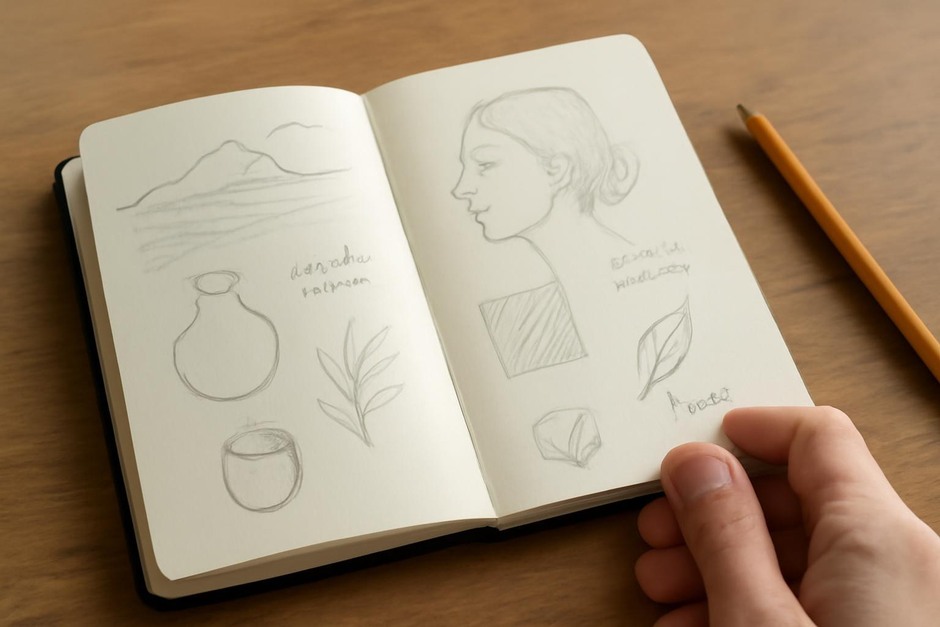
- Start with a simple format: left page for observation, right page for notes or small studies.
These modest constraints lower the cost of starting and reduce decision fatigue. They also create useful constraints that encourage creative thinking within limits.
Use prompts to jumpstart seeing
Prompts are especially useful when a blank page feels intimidating. Simple prompts work well and keep the practice practical:
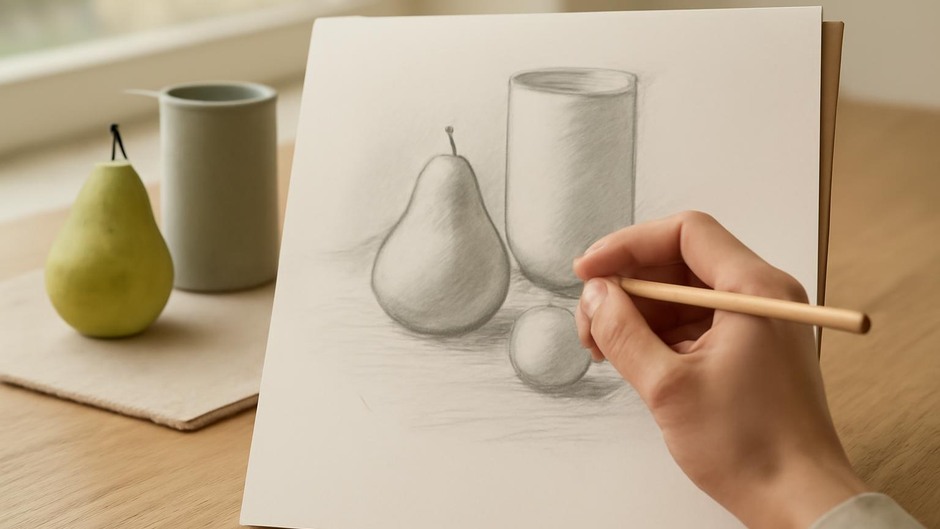
- Draw an object at three different scales.
- Record a light change over ten minutes.
- Make a page of quick thumbnail compositions for a single subject.
Rotate prompts so the practice remains varied. Over time you will notice which prompts yield the most productive discoveries for your work.
Sketch for questions, not answers
A sketchbook is a place to pose questions rather than provide final answers. Treat it as a laboratory where ideas are proposed and tested. When a sketch reveals an interesting problem — a proportion that feels off, a colour that suggests a mood, a small compositional tension — make a note and return later with a focused study.
Record process as well as image
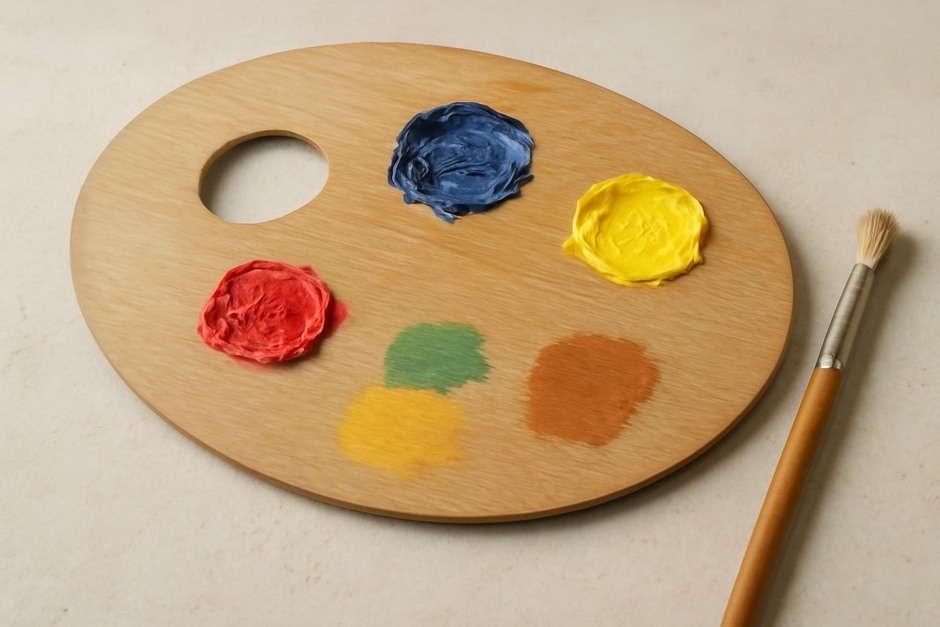
Short notes, dates, and quick colour swatches anchor your visual experiments. A few words beside a sketch can clarify intent: why you chose a viewpoint, what you were testing, or what surprised you. These annotations make the sketchbook more useful when you revisit pages months later.
Accept uneven days
Some entries will be excellent, others will be perfunctory. Both kinds are valuable. The ordinary pages keep a habit alive and often contain small revelations that only show up in hindsight. Treat the sketchbook as an accumulation of attention rather than a sequence of masterpieces.
Review and reuse
Set time aside every month to flip through recent pages. Look for recurring problems, motifs, and opportunities to turn a sketch into a more finished study. Copying or expanding from your own pages is a reliable way to convert spontaneous observations into considered work.
With a steady, low-pressure sketchbook habit you build visual memory, clarify questions, and create a supply of ideas to revisit. The practice trains not just hand and eye, but the habit of returning to the same problems with patience and curiosity.